Bronchiolitis

Bronchiolitis is a viral infection that affects the small breathing tubes in the lungs, causing them to become swollen and filled with mucus. This makes it harder for air to move in and out of the lungs. Bronchiolitis happens most often in babies under one year of age and is the most common reason infants are admitted to hospital, especially in late fall and winter.

What you need to know 

  • Bronchiolitis is caused by a virus
  • It is most common in babies under one year of age
  • Symptoms can last 2–3 weeks
  • Most children can be cared for safely at home
  • Antibiotics do not help bronchiolitis 

  • Stuffy or runny nose
  • Cough (sometimes tight)
  • Wheezing (a whistling sound from the chest)
  • Fever
  • Trouble breathing

What causes bronchiolitis?

  • Most often caused by RSV (respiratory syncytial virus)
  • Spread by coughs, sneezes, or touching contaminated objects (toys, keyboards, hands)
  • Virus enters through the mouth, nose, or eyes 
Bronchiolitis is usually diagnosed by a healthcare provider based on your child’s symptoms and breathing. Most children do not need tests, like chest x-rays.

Bronchiolitis is caused by a virus, so antibiotics will not help.

  • Most children do not need medication and can be cared for at home
  • Some children may receive breathing medication or suctioning in the Emergency Department
  • A mask may be used to help your child breathe in the medication
  • Children born prematurely or with heart or lung conditions may need hospital care 


Caring for your child at home 

Give extra fluids 

  • Breast milk, formula, water, or juice
  • Babies over 4 months may have apple juice
  • Offer smaller amounts more often

Remove nose mucus

  • Place 3 drops of warm saline in each nostril
  • Wait 1 minute
  • Use a nasal aspirator like NoseFrida

Keep your home smoke‑free

Ensure plenty of rest

Return to daycare: Your child may return when they are back to their usual level of activity and do not have a fever

Treat fever and discomfort

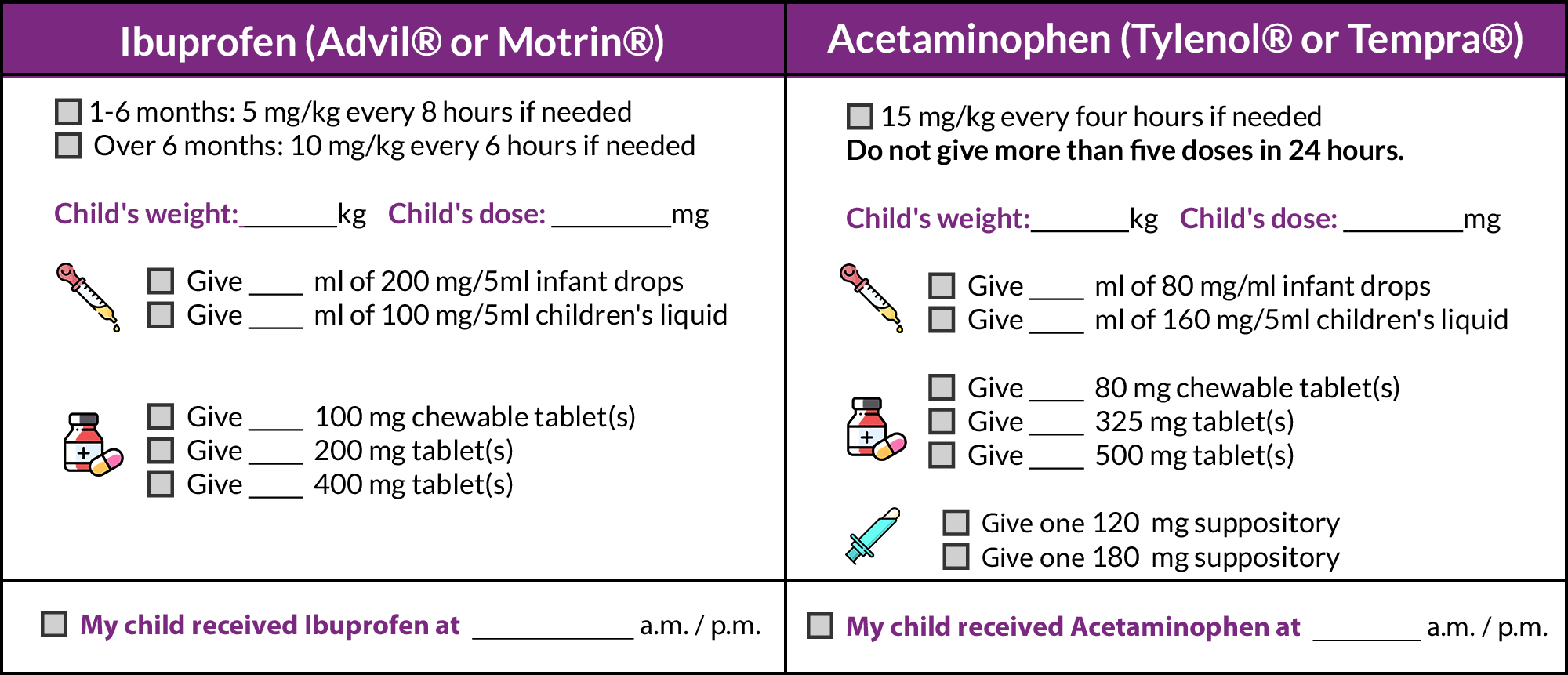
  •  If needed, give acetaminophen (Tylenol®, Tempra®)
  • Give ibuprofen (Advil®, Motrin®) only if your baby is over 6 months

Bring your child to the emergency department if they have:

  • Trouble breathing (nostrils flaring, skin pulling in between ribs)
  • Breathing that is faster than usual
  • A weak cry or voice
  • Pale or blue lips
  • Difficulty waking up easily
  • Poor feeding
  • Fewer than 4 wet diapers in one day 


Prevention:

  • 15 second hand washing is the best way to prevent bronchiolitis 

Everyone should wash their hands:

  • • Before touching a baby 
    • After coughing, sneezing, blowing their nose, or using the toilet 
    • After caring for someone who is sick 
    • Before meals 

Additional prevention tips

  • Cough or sneeze into the bend of your arm
  • Keep anyone with fever or cold symptoms away from your baby
  • Ask your health care provider about the RSV vaccine  

Disclaimer 

These resources are for educational purposes only. If you have questions, speak with your health care provider. Last updated: June 2026

Have you registered for MyChart?

MyChart is a free, secure, online patient portal that connects patients to parts of their CHEO electronic health record, anywhere, at any time.