
- Hard or painful stool
- Very large stool
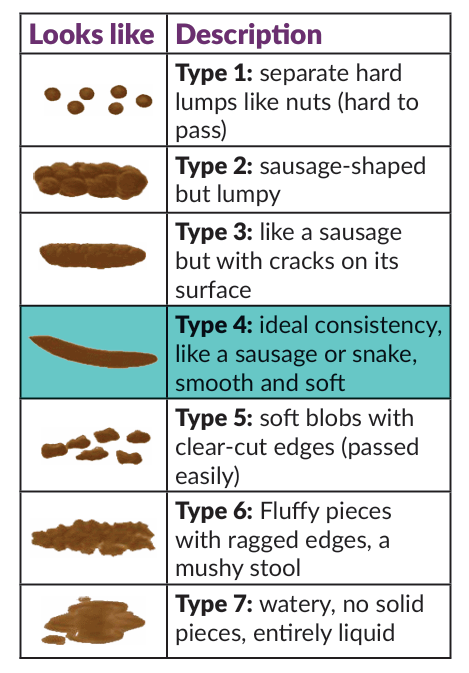
- Stool type 1, 2, or 3 on the Bristol Stool Chart
- Stomach pain or cramps
- Trouble passing urine or frequent urination
- Blood in stool
- Stool leaking into underwear
- Behaviour changes
Constipation
Constipation is when stool builds up in the bowels and causes discomfort. It can happen even if a child or youth has a bowel movement every day. Constipation is common and rarely caused by a serious illness.
What you need to know
- Constipation often develops over time and may take months to improve.
- Stool buildup stretches the bowel, making it harder to empty.
- Medication plus routine changes are usually needed.
Treatment usually requires medication for several months along with diet and routine changes.
Step 1: PEG3350 bowel clean out (3 days)
Use an oral laxative containing polyethylene glycol 3350 (PEG3350). Common brands include Lax-a-Day®, Restoralax®, Relaxa®, and Clearlax®.
|
Weight |
Dose of PEG3350 |
Frequency |
|
7–10 kg |
2 tsp in 100 mL fluid |
Twice a day for 3 days |
|
11–13 kg |
3 tsp in 150 mL fluid |
Twice a day for 3 days |
|
14–19 kg |
4 tsp in 200 mL fluid |
Twice a day for 3 days |
|
20–34 kg |
5 tsp in 250 mL fluid |
Twice a day for 3 days |
|
35–50 kg |
5 tsp in 250 mL fluid |
3 times a day for 3 days |
|
50+ kg |
10 tsp in 500 mL fluid |
3 times a day for 3 days |
Step 2: Bowel retraining routine (2 months)
Continue PEG3350 daily to prevent constipation and retrain the bowel.
|
Weight |
Dose of PEG3350 |
Frequency |
|
7–10 kg |
2 tsp in 100 mL fluid |
Once a day for 2 months |
|
11–13 kg |
3 tsp in 150 mL fluid |
Once a day for 2 months |
|
14–17 kg |
4 tsp in 200 mL fluid |
Once a day for 2 months |
|
|
5 tsp in 250 mL fluid |
Once a day for 2 months
|
Other things you can do at home to help
Give a healthy diet
Vegetables, fruits, and grains are good sources of fibre. The amount of fibre needed each day depends on your child's age. See Canada's Food Guide for the number of servings of vegetables, fruits and grains your child should have each day. Each meal and snack should include a fibre rich food. Increase fibre in your child's diet gradually.
Make sure to increase fluids at the same time.
Increase fluids
- A 10 kg (22 lb) child needs 1 litre (4 cups) each day.
- A 20 kg (44 lb) child needs 1.5 litres (6 cups) each day.
- A 45 kg (99 lb) child needs 2 litres (8 cups) each day
Toddlers should have just 2-3 cups of milk each day. The rest of their fluid intake should be water. Limit juice, as it can cause cramping and gas.
Regular toileting
It can take weeks or months to train the bowel back to normal patterns. Take advantage of the body’s normal urge to empty after meals. 20-30 minutes after each meal at home, have your child sit on the toilet or potty for 1 minute each year of age (for example, 3 minutes for a 3-year-old). Give your child a foot stool if needed. This will make your child more comfortable and provide some support to help them let go of a bowel movement. Join your child to read a book together or chat and catch up! Younger children may like stickers on a chart for sitting in the toilet after each meal.
Keep a diary of:
- how often your child has a bowel movement
- the type of stool your child has (check the Bristol Stool chart and record the stool type)
More physical activity
Regular physical activity helps stimulate normal bowel function and keeps the bowel healthy. Children need at least one hour of moderate physical activity each day. For more information, check out Canada’s Physical Activity Guide to Healthy Living. Other things to consider
- taking all milk or egg out of the diet for at least two weeks, in case there is an allergy
- Severe pain or pain lasting longer than 30 minutes
- Fever
- Vomiting
- Weight loss
- Waking from sleep to pass stool
- Cracks in the skin around the anus
- Rectal prolapse
- Ongoing constipation after two weeks of treatment
- Large amounts of blood in stool
Download the care resource.
Disclaimer
These resources are for educational purposes only. If you have questions, speak with your health care provider. Last updated: June 2026
Have you registered for MyChart?
MyChart is a free, secure, online patient portal that connects patients to parts of their CHEO electronic health record, anywhere, at any time.