
Croup is usually diagnosed based on your child’s symptoms and breathing. In most cases, no special tests are needed.
Croup
Croup is an infection of the breathing tube (trachea or windpipe) below the vocal cords (voice box). It is caused by a virus, so antibiotics do not help. The infection causes swelling of the windpipe, which leads to noisy breathing and sometimes difficulty breathing.
Croup happens most often in winter and early spring (October to May) and is most common in babies and children aged 1 to 4 years. Croup usually lasts 5 to 6 days.
Below you will find information to help you better understand, cope with, and support a child with croup.
Common symptoms of croup
- noisy breathing, especially when breathing in
- bark‑like cough
- hoarse voice
- fever
- feeling unwell
Breathing trouble often gets worse at night and may wake your child from sleep.
Croup is treated by helping reduce breathing difficulty and keeping your child comfortable while the infection runs its course.
Treatment focuses on:
• easing breathing
• reducing fever and throat discomfort
• keeping your child calm and well hydrated
* Do not give Ibuprofen (Advil®, Motrin®) to babies under six months of age
Aftercare / What to do at home
Helping your child breathe more comfortably
• Wrap your child in a blanket and take them outside into cool air
• You can also hold your child in front of an open window or open freezer door
• If breathing is still noisy or difficult after 10–15 minutes, bring your child to the hospital
General care
Ensure your child gets lots of rest and offer plenty of fluids such as:
- breast milk
- water
- apple juice
- popsicles
- formula
Treating fever or sore throat
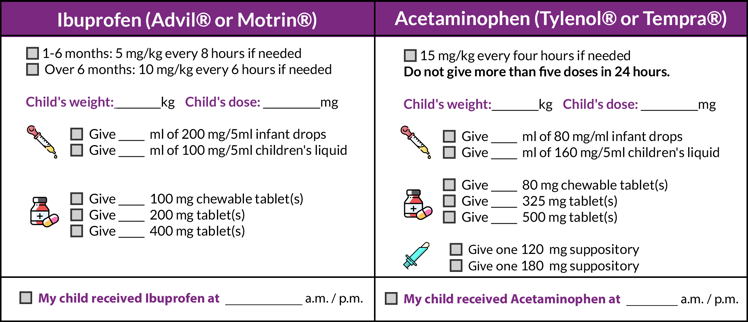
- Give acetaminophen (Tylenol®, Tempra®) or ibuprofen (Advil®, Motrin®) for fever or sore throat Fo
- llow dosing instructions carefully
- Do not give ibuprofen to babies under six months
Telehealth Ontario
1‑866‑797‑0000
TTY: 1‑866‑797‑0007
Health information from registered nurses, 24 hours a day, 7 days a week.
Bring your child to the emergency department if they:
- have loud, laboured breathing after 10–15 minutes of cool air exposure
- have blue lips or fingernails
- will not drink fluids
- have trouble swallowing
- are weak and have no energy
- start to drool
Disclaimer
These resources are for educational purposes only. If you have questions, speak with your health‑care provider. Last updated: June 2026
Have you registered for MyChart?
MyChart is a free, secure, online patient portal that connects patients to parts of their CHEO electronic health record, anywhere, at any time.