
- Triggers may include poor sleep, dehydration, stress, or missed meals
- Blood sugar drops can contribute to headaches
- Stress and lack of physical activity may worsen symptoms
Headaches
Headaches are a common condition that can affect children and adolescents. Proper lifestyle habits, early treatment, and tracking symptoms can help prevent and manage headaches effectively.
What you need to know
- Proper lifestyle habits can help prevent headaches before they start
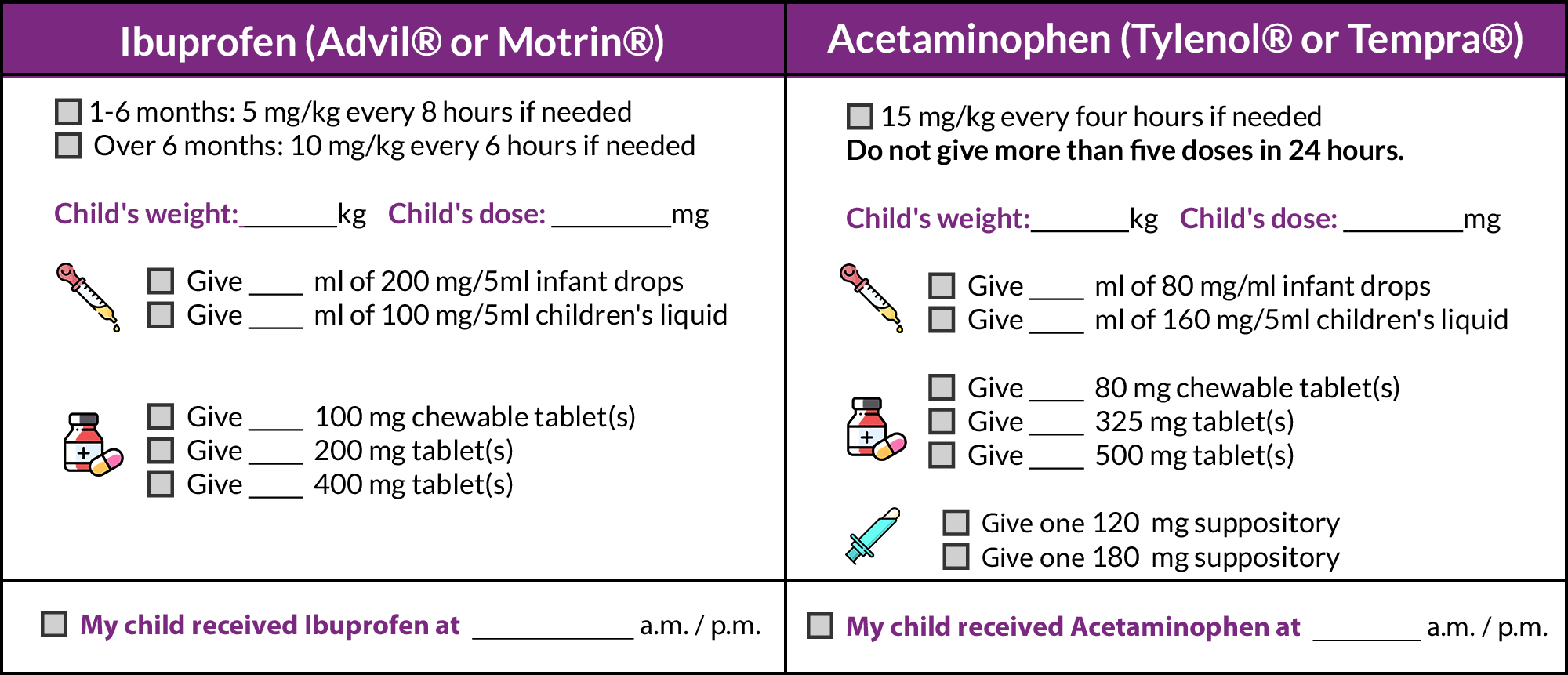
- Medications work best when given at the first signs of a headache
- Avoid overuse of pain medications (no more than 15 days per month)
Medications work best if given at the first signs of a headache. Pain medications should not be given on more than 15 days per month to avoid medication overuse headaches.
Prevention
Get better sleep:
- Maintain a regular sleep schedule, even on weekends
- Keep the bedroom screen-free for at least one hour before bedtime
- Aim for 8–11 hours of sleep each night
Keep a balanced diet:
- Eat a high-protein breakfast within one hour of waking
- Eat 3 meals and 1–3 snacks daily
- Include protein, carbohydrates, and fruits/vegetables at each meal
- Drink plenty of water and avoid sugary or caffeinated drinks
Stay active:
- At least 60 minutes of moderate to vigorous activity daily
Aftercare / What to do at home
- Keep a headache diary to track triggers and treatments. Bring this to appointments.
Contact your care team if:
- You need medication 3 or more times per week
- The treatment plan is not working
Go to the Emergency Department if:
- Severe or worsening headache
- New concerning symptoms, which may include but is not exhaustive to associated neck stiffness, visual/hearing changes, persistent vomiting, loss of sensation, inability to move certain parts of the body, altered level of consciousness
Disclaimer
These resources are for educational purposes only. If you have questions, speak with your health care provider. Last updated: June 2026
Have you registered for MyChart?
MyChart is a free, secure, online patient portal that connects patients to parts of their CHEO electronic health record, anywhere, at any time.