
After a minor head injury, your child may:
- Have a mild headache
- Feel sick to their stomach (nausea) for a short time
- Vomit once or twice
- Feel dizzy or light‑headed
This website uses cookies to enhance usability and provide you with a more personal experience. By using this website, you agree to our use of cookies as explained in our Privacy Policy.
People visiting CHEO will need to wear a mask in all waiting areas and during all clinical interactions. There is a limit of 2 caregivers for appointments.
A minor head injury happens when a child or teen is hit on the head but does not have serious problems right away. Most children recover well, but symptoms can sometimes appear hours or days later.
What you need to know
After a minor head injury, your child may:
Minor head injuries are assessed by a healthcare provider based on how the injury happened, symptoms, and your child’s behaviour. Ongoing monitoring at home is essential in the days following the injury.
Most minor head injuries do not need hospital treatment and can be managed at home with rest, pain control, and observation.
Your doctor will:
Aftercare
Caring for your child at home:
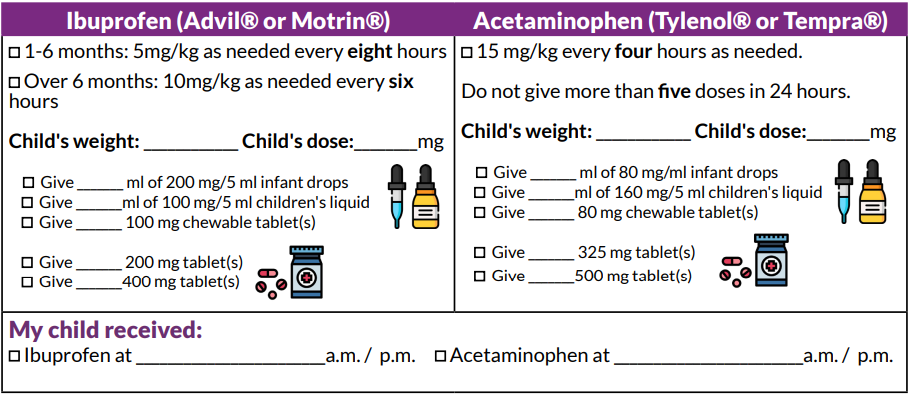
Pain and fever medications
Fever and pain medicines come in different concentrations (mg per mL, tablet, or suppository).
Return to activities: Your doctor will tell you when your child can return to gym class and sports
Babies and toddlers
Bring your baby to the Emergency Department right away if your baby:
Children and youth
Bring your child to the Emergency Department right away if your child:
Call 911 if:
Telehealth Ontario (health information from registered nurses)
1‑866‑797‑0000 or TTY: 1‑866‑797‑0007
24 hours a day, 7 days a week
Disclaimer
These resources are for educational purposes only. If you have questions, speak with your health care provider. Last updated: June 2026
Have you registered for MyChart?
MyChart is a free, secure, online patient portal that connects patients to parts of their CHEO electronic health record, anywhere, at any time.